AS/NZS 3678-250 · 3679.1-300
Mild steel
Plate, flat bar, RHS and angle for frames, brackets and base plates. Welds easily; needs a coating outdoors.
- Density
- 7850 kg/m³
- Forms
- Plate 1.6–25, bar, RHS/SHS
- Weld
- MIG
The right grade is the one the drawing calls for. Where a request and a drawing disagree (304 in the email, 316L on the title block) we ask before we buy a single plate.
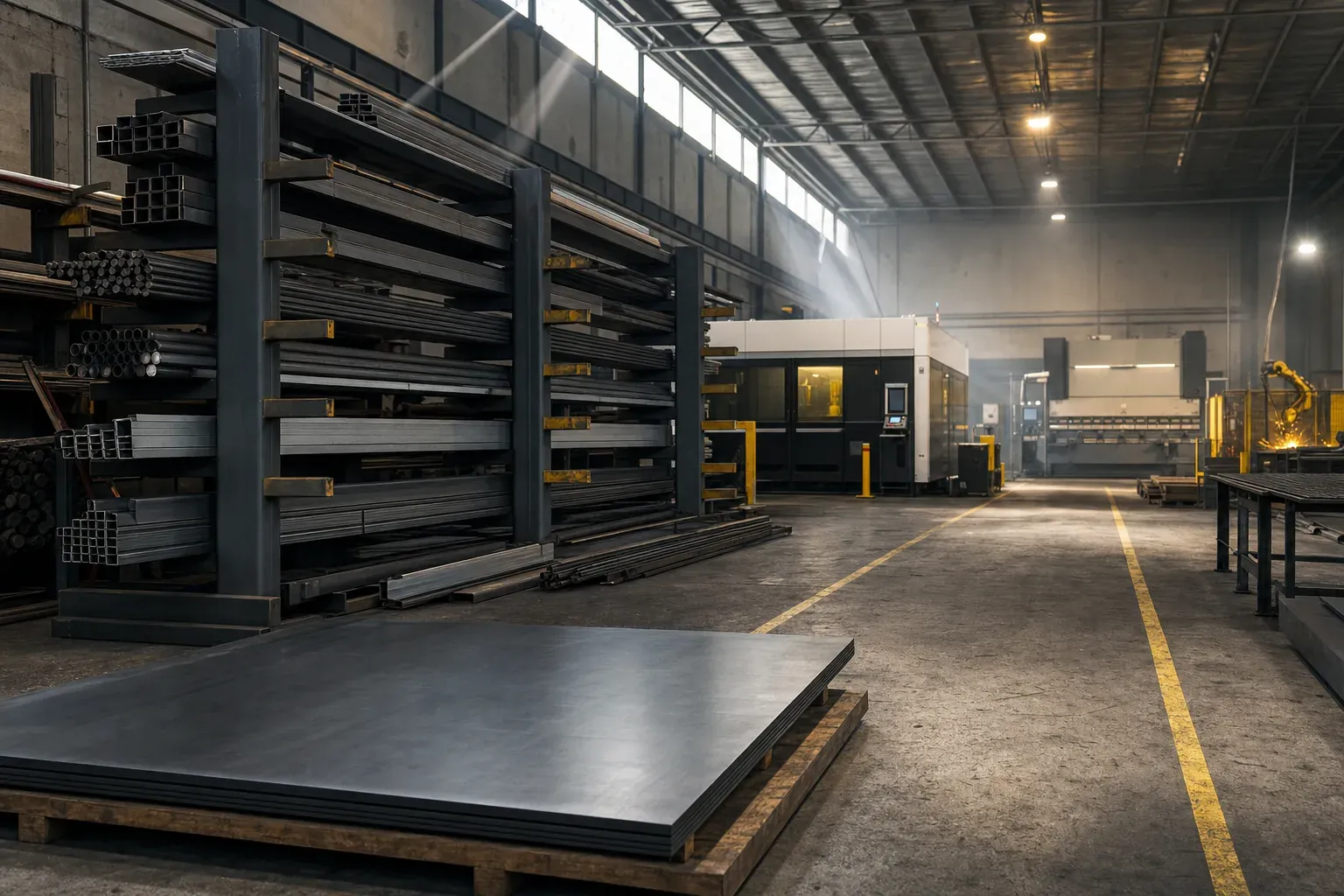
Plate, flat bar, RHS and angle for frames, brackets and base plates. Welds easily; needs a coating outdoors.
Sheet for covers and enclosures. Cut edges are left raw unless hot-dip galvanised after fabrication.
304 for general corrosion resistance; 316L where chlorides, food acids or washdown chemicals are involved. Passivated after welding.
5052 folds cleanly for covers; 5083 for marine and plate work; 6061-T6 machines well for blocks and fittings.
Pre-hardened 4140 for shafts and wear parts; 1045 for general turned work. Black oxide or zinc plated to finish.
Brass, bronze and engineering plastics (acetal, nylon, UHMWPE) for machined bushes and wear pads, bought in per job.
The same method our estimates use for material allowance: blank size from the drawing, a cutting allowance, then mass. Try it with your own part.
Ask for traceable material on the RFQ and we'll buy from suppliers who issue mill certificates, keep heat numbers against the job card, and transfer them to offcuts.
Supplied with the delivery documents when the material supplier provides them.
Recorded at cutting so each part can be traced back to its plate or bar.
Remnants keep their grade and heat marking so they never become "probably 304".
If it's not, or the email says something different, we'll list it as a question with your quote.
Request a quote